

Quick Summary
Mindfulness exercises for anxiety relief work by interrupting the body's fight-or-flight response before it runs its course. Slow breathing with a longer exhale is the most direct tool, and short practices like a three-breath reset or a 90-second grounding protocol fit into busy days.
- Breathe in for four counts and out for six or eight counts, repeating for three to five minutes.
- Try the physiological sigh: two inhales through the nose, then one long exhale through the mouth.
- A five-minute body scan helps you recognize where anxiety lives in your body.
- The 90-second emergency protocol moves through anchor, breathe, orient, and name, in that order.
- Start with two minutes daily, since short consistent practice beats occasional long sessions.
Table of Contents
- Why Mindfulness Helps Calm an Anxious Nervous System
- Mindful Breathing Techniques for Immediate Calm
- 5-Minute Mindfulness Exercises for Anxiety When Time Is Short
- Grounding Techniques for Anxiety in High-Stress Moments
- Mindful Observation, Movement, and Eating for Everyday Anxiety
- How to Stay Consistent with Meditation When Anxiety Shows Up
- Choosing Your First Mindfulness Practice and Tools to Support It
- Frequently Asked Questions
Why Mindfulness Helps Calm an Anxious Nervous System
Last Updated: November 1, 2026
Mindfulness exercises for anxiety relief work by interrupting the stress response before it runs its course. When anxiety rises, the body shifts into a fight-or-flight state, and the mind starts rehearsing worst-case scenarios.
Mindfulness is the practice of paying deliberate, non-judgmental attention to the present moment. In the context of anxiety, that means noticing a racing heartbeat or a tight chest without immediately trying to fight it or argue it away.
The practical question is which exercises actually work, and when. The sections below cover breathing, short routines, grounding for crisis moments, everyday habits, and how to build a practice that lasts.
What Happens in the Body During Anxiety
Anxiety activates the sympathetic nervous system. Heart rate climbs, breathing becomes shallow and fast, and muscles tense. Mindfulness works largely by engaging the parasympathetic side, the branch that slows the body down. Slow, deliberate breathing is the most direct lever most people have.
Many practitioners find that the first few seconds of noticing anxiety are the hardest part. Once you name what is happening ("my chest is tight, I'm worried about tomorrow"), the intensity often softens. That naming step is itself a mindfulness skill.
Watch out: Mindfulness is not a replacement for medical care. The National Institute of Mental Health (NIMH information on anxiety disorders) offers reliable background on when to seek help.
Mindful Breathing Techniques for Immediate Calm
Breath is the fastest tool you have because it is always with you and it directly influences the nervous system. A common starting point is a slow exhale that runs longer than the inhale.
Try this simple sequence:
- Sit or stand with your feet flat on the floor.
- Inhale through your nose for four counts.
- Exhale slowly through your mouth for six counts.
- Repeat for three to five minutes, keeping attention on the sensation of the breath.
A useful variation is the physiological sigh: two inhales through the nose, one long exhale through the mouth. Some people find this relieves tension faster than standard deep breathing.
The most common mistake is forcing the breath. If you feel dizzy or short of breath, let the breath return to its natural rhythm and focus only on the exhale.
5-Minute Mindfulness Exercises for Anxiety When Time Is Short
Not everyone has twenty minutes a day. Mindfulness tools for busy professionals collect practices that fit a packed schedule.
Five-minute body scan: Lie down or sit comfortably. Start at your feet and slowly move your attention upward, noticing sensations without changing them. Spend about thirty seconds on each body area.
Three-breath reset: Before a meeting or difficult conversation, take three slow breaths and silently name one thing you can see, hear, and feel. It takes less than a minute and works well at a desk.
Mindful observation: Pick an everyday object, such as a mug or a candle, and study it for two minutes. Notice its color, texture, weight, and shadow. Redirecting attention to a neutral object gives an anxious mind something concrete to hold.
Grounding Techniques for Anxiety in High-Stress Moments
Grounding techniques are designed for moments when anxiety feels overwhelming and abstract thinking is hard. Spiritual tools to reduce daily stress offers more options for these moments. They anchor attention in the physical senses, which pulls the mind away from catastrophic rehearsal and back to concrete input. Most guides stop at the 5-4-3-2-1 method. This section goes further: it gives you a timed emergency protocol for panic-level moments and explains why each step works.
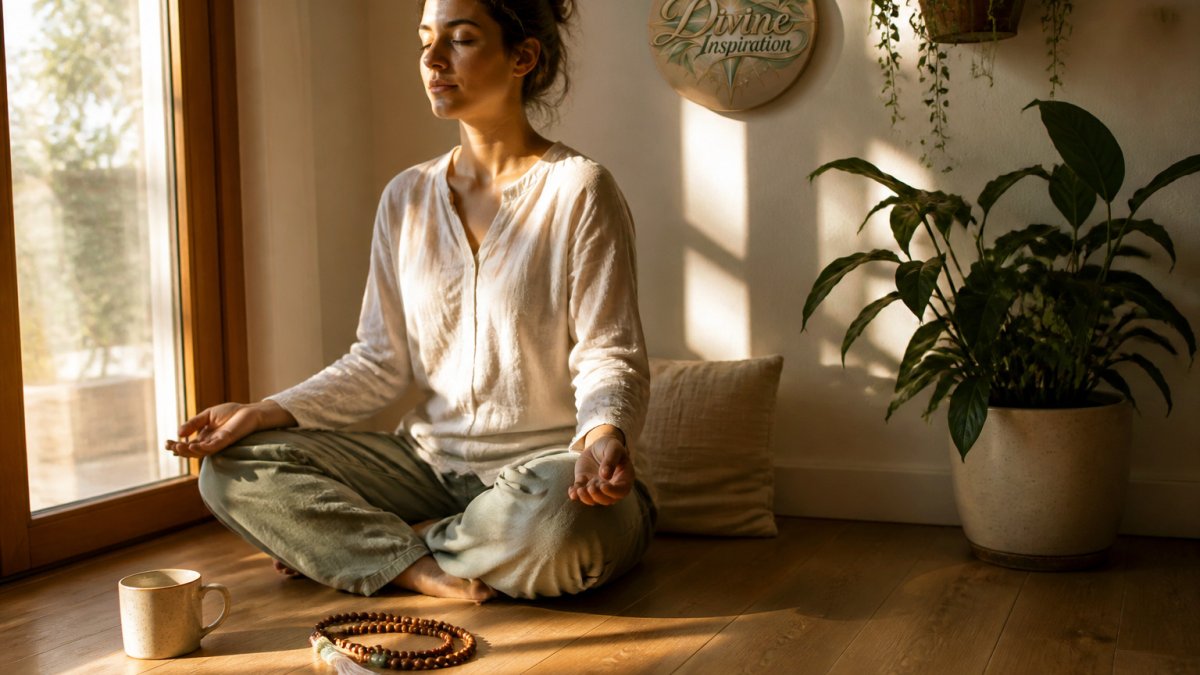
The 90-Second Emergency Protocol
A panic surge typically peaks and begins to recede within a few minutes if it is not fed by continued catastrophic thinking. The goal of an emergency protocol is not to eliminate the feeling but to ride out the peak without escalating it.
Seconds 0-15: Anchor the body. Press both feet flat into the floor and push down as if you are trying to stand through concrete. Notice the pressure in your heels and the contact of your back against the chair.
Seconds 15-45: Regulate the breath. Use the physiological sigh: two inhales through the nose (a normal inhale followed by a short top-up inhale), then one long exhale through the mouth. Repeat three times. Do not force the breath; if you feel lightheaded, return to natural breathing and focus only on making the exhale slightly longer than the inhale.
Seconds 45-75: Orient with the senses. Name five things you can see, four you can touch, three you can hear, two you can smell, and one you can taste. Say each item aloud or subvocalize it. The counting structure gives a racing mind a task with a clear endpoint, and the sensory focus competes with the internal threat narrative for attention.
Seconds 75-90: Name and normalize. Say silently or aloud: "This is a surge of anxiety. It will pass.
Why Grounding Works on the Nervous System
Grounding is not a distraction trick. It works because anxiety is maintained by a loop between body sensations and catastrophic interpretation. A racing heart is read as danger, which produces more adrenaline, which makes the heart race harder. Grounding interrupts that loop at the sensory level. Strong physical input, pressure, temperature, texture, gives the brain competing data that is concrete and non-threatening.
This is why grounding works best when practiced before a crisis. A tool you have used many times is far easier to reach for during a crisis than one you are trying for the first time. Rehearse the 90-second protocol once a week during a calm moment so the sequence is familiar.
Morning Ritual Bundle for Mindfulness: Embrace Love and Transform Your Day →
Additional Grounding Tools
- Temperature shift: Hold an ice cube or run cool water over your wrists for thirty seconds. The sudden temperature change is a strong, safe sensory signal that pulls attention outward.
- Texture anchor: Keep a smooth stone, a mala bead, or a textured keychain in your pocket. Focus on its weight, temperature, and surface. A physical anchor can help; keeping a meaningful object within reach gives you something to touch and a cue to pause.
- Weighted contact: Sit with your back against a wall or hold a folded blanket on your lap. Deep pressure is calming for many people and requires no equipment beyond what is already in the room.
- Movement reset: Stand up and walk slowly to another room, noticing each step. Changing physical location can break the association between a place and a spiral of worry.
Mindful Observation, Movement, and Eating for Everyday Anxiety
Mindfulness does not have to happen on a cushion. Everyday activities offer repeated chances to practice presence.
Mindful movement: Gentle walking, stretching, or yoga can release built-up tension. Pay attention to how each step feels, the shift of weight, and the rhythm of breath. A meditation cushion can make seated practice more comfortable for longer sessions.
Eating mindfully: Eat one meal a day without screens. Notice the smell, taste, and texture of each bite.
Mindful morning routines: Starting the day with intention can set a calmer tone. A morning ritual with a warm drink in a mindful mug, a few minutes of journaling, and a slow breath before checking your phone builds steadiness before the day's pressures arrive.

Journaling deserves a special note. Writing down worries, then reviewing them with a calm mind, helps separate real concerns from anxious speculation. A hardcover journal with a matte cover can make that habit feel intentional.
How to Stay Consistent with Meditation When Anxiety Shows Up
Consistency is where most people struggle. Anxiety itself can make practice feel pointless, and motivation fades quickly.
A few approaches help:
- Start smaller than you think you need to. Two minutes daily beats thirty minutes once a week.
- Attach the practice to an existing habit. Meditate right after your morning coffee or before bed.
- Expect skipped days. Missing a day is normal. Returning the next day matters more than an unbroken streak.
- Track gently. A simple checkmark on a calendar is enough.
When anxiety is high, shorten the practice rather than dropping it. A single minute of slow breathing still counts.
A dedicated space can help some people. A seated cushion in a quiet corner, a candle, or incense can signal to the body that it is time to slow down. Items such as a meditation cushion or incense can help mark that transition, though any consistent cue works.
Choosing Your First Mindfulness Practice and Tools to Support It
Choosing a practice can feel overwhelming.
Here is a simple way to decide:
| Your Situation | Start With | Why |
|---|---|---|
| Sudden anxiety episodes | Breathing and grounding | Fast, portable, works in the moment |
| Limited time | 5-minute body scan | Fits a busy schedule |
| Trouble sitting still | Mindful movement or walking | Engages the body |
| Building a daily habit | Morning ritual | Anchors the practice to your routine |
Tools can support a practice, but they do not create one.
For a fuller overview of starter tools, see our guide on Best Meditation Tools for Beginners 2026. If staying consistent is your main challenge, How To Stay Consistent With Meditation covers habit-building in detail.
Some readers prefer to bundle a routine together.
The right choice is the one you will actually use.
Frequently Asked Questions
How long does it take for mindfulness exercises to reduce anxiety? Many people notice a short-term calming effect within minutes of a breathing exercise.
Can mindfulness replace medication or therapy? No. Mindfulness can complement professional treatment but should not replace it.
How much time do I need each day? Two to five minutes is enough to start. Consistency matters more than duration.
Do I need special equipment to practice? No. Mindfulness can be practiced anywhere with no tools.
Frequently Asked Questions
How do you practice mindfulness for anxiety?
Start with one short, repeatable practice such as paced breathing or a sensory check-in. Sit comfortably, notice your breath or five things you can see, hear and feel, and gently return your attention whenever your mind drifts toward worry. Practicing for five to ten minutes once or twice a day builds the skill so it is available during stressful moments. Consistency matters more than length, so a brief daily session usually helps more than an occasional long one.
What are the best mindfulness exercises for panic attacks?
During a panic attack, slow exhale-focused breathing and a grounding exercise are the most practical options. Breathe in gently through the nose and out slowly through the mouth, keeping the exhale longer than the inhale. Then name three things you can see and feel to anchor attention in the present. These techniques are not a substitute for medical care, so anyone with frequent panic attacks should speak with a licensed health professional.
Can mindfulness make anxiety worse?
For some people, focusing on the body or breath can briefly increase awareness of uncomfortable sensations, which feels unsettling at first. If a practice consistently heightens distress, shorten the session, keep your eyes open, or switch to an external focus such as sounds in the room. Anyone with trauma or severe anxiety should consider working with a qualified therapist to adapt the practice safely.
How long does it take for mindfulness to help with anxiety?
Many people notice a calmer baseline within a few weeks of daily practice, while quick techniques such as breathing can help within minutes. Results vary with how regularly you practice and how intense your anxiety is. Tracking a simple note after each session, such as your stress level before and after, makes progress easier to see and keeps you motivated to continue.

0 comments