

Last Updated: October 28, 2026
Quick Summary
You can find christ consciousness in nature by following seven steps that take about twenty minutes: choose a reachable setting, set one intention, practice heart-centered breathing, study one natural element slowly, speak a devotion, sit in silence for five minutes, and close with gratitude and one small action. The practice draws on Christian mysticism and the example of Jesus, who often withdrew to quiet places to pray.
- Pick a place you can reach in under ten minutes, such as a backyard, park bench, or balcony.
- Breathe in for four counts and out for six with a hand on your chest.
- Sit in silence for five minutes after speaking your devotion.
- Use a 15-minute structure of settle, anchor, reflect, release, and close.
- Keep early outdoor sessions to five or ten minutes until you know how your mind responds.
Table of Contents
- What Christ Consciousness Means in Nature
-
How to Connect with God Through Nature: 7 Steps
- Step 1: Choose a Setting That Fits Your Body and Schedule
- Step 2: Arrive, Settle, and Set an Intention
- Step 3: Practice Heart-Centered Awareness
- Step 4: Read the World Around You Slowly
- Step 5: Speak Your Devotion Aloud or in Silence
- Step 6: Sit in Silence for Five Minutes
- Step 7: Close with Gratitude and a Small Action
- Christ Consciousness Meditation: A Nature-Based Practice
- Safety and Accessibility in Outdoor Practice
- Christ Consciousness in Daily Life: A Weekly Practice Plan
- Common Mistakes That Keep People from Oneness
- Choosing a Physical Anchor for Your Practice
- Frequently Asked Questions
What Christ Consciousness Means in Nature
Christ consciousness in nature is the practice of seeking the living presence of divine love through the natural world. This guide explores the forest, shoreline, and garden as settings for reflection.
The idea draws from Christian mysticism and the teachings of Jesus, who often withdrew to quiet places to pray. Nature offers the same invitation today.
Metaphor, Belief, and What You Can Actually Observe
Three things get mixed together here, and separating them helps.
- Metaphor: Nature as a picture of divine love, like a vine and branches.
- Belief: A held conviction that God's presence fills creation.
- Observable experience: What you actually notice, such as calm breathing, a softened heart, or steady attention.
A grounded practice honors all three without pretending they are the same. You do not need to prove anything to sit under a tree and pay attention.
How to Connect with God Through Nature: 7 Steps
The seven steps below take about twenty minutes. You can shorten them to five on busy days.
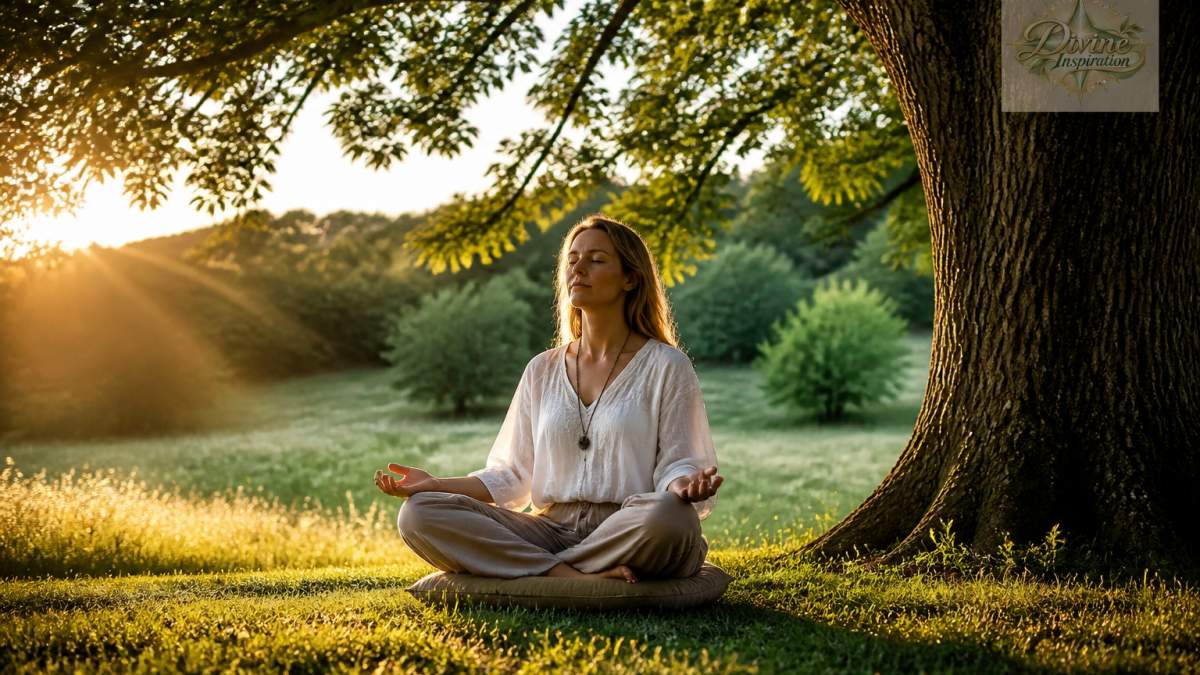
Step 1: Choose a Setting That Fits Your Body and Schedule
Pick a place you can reach in under ten minutes. A backyard, park bench, or balcony all work. Comfort matters more than scenery.
If sitting on the ground is hard on your hips or back, a supportive seat helps. Our organic buckwheat meditation cushion is filled with buckwheat hulls and has a removable organic cotton cover. For damp grass or cool mornings, a cork yoga mat is made from cork and natural rubber.


Step 2: Arrive, Settle, and Set an Intention
Sit down. Feel the ground under you. Take three slow breaths.
Then name one intention in a single sentence. Examples: "I want to notice love today." "I want to be still." Keep it short and honest.
Step 3: Practice Heart-Centered Awareness
Place a hand on your chest. Breathe in for four counts, out for six. With each exhale, let your attention drop from your head into your heart.
This is the core of heart-centered awareness. You are not forcing a feeling. You are making room for one.
Step 4: Read the World Around You Slowly
Choose one element: a leaf, a stone, moving water. Study it for two minutes. Notice color, texture, movement.
Step 5: Speak Your Devotion Aloud or in Silence
Say a prayer, a line from scripture, or your own words. Devotion does not require formal language. A whispered "thank you" counts.
Step 6: Sit in Silence for Five Minutes
Stop doing. Just sit. Silence is where reflection deepens.
Step 7: Close with Gratitude and a Small Action
Name one thing you are grateful for. Then choose one kind act to carry back into your day.
| Step | Time | What You Do |
|---|---|---|
| 1. Choose setting | 2 min | Find a reachable, comfortable spot |
| 2. Arrive and set intention | 3 min | Breathe, name one aim |
| 3. Heart-centered awareness | 4 min | Hand on chest, slow breathing |
| 4. Read the world slowly | 2 min | Study one natural element |
| 5. Speak devotion | 2 min | Prayer or own words |
| 6. Sit in silence | 5 min | No doing, just presence |
| 7. Gratitude and action | 2 min | Name thanks, pick one kind act |
Christ Consciousness Meditation: A Nature-Based Practice
Christ consciousness meditation outdoors can combine breath, scripture or silence, and the natural setting itself. One possible practice is to sit, breathe, reflect, and return attention to love whenever the mind wanders.
The Basic Mechanism
Let a thought about divine love rise, hold it gently, and let it go. When you notice you have drifted, you can return your attention to the practice.
A simple pattern is in for four counts, out for six. If counting distracts you, drop the count and simply follow the out-breath.
A Repeatable 15-Minute Structure
Use this as a template you can shorten to five minutes on busy days:
Transform Your Space with the Christ Consciousness Canvas: A Symbol of Unity →
- Settle (2 minutes). Sit, feel the ground, take three slow breaths.
- Anchor (2 minutes). Hand on chest, in for four, out for six.
- Reflect (5 minutes). Choose one prompt below and stay with it. Do not chase answers; let one thought rise and rest.
- Release (3 minutes). Stop repeating the prompt. Sit in silence and let the setting do the work.
- Close (3 minutes). Name one thing you are grateful for and one small action you will carry back into your day.
Specific Nature Settings and Prompts
Different settings suit different temperaments. Pick one setting and one prompt per session rather than cycling through all of them:
- Forest: "What here is growing quietly without my help?" Then notice one thing that is growing without any effort from you.
- Shoreline: "What in me needs to be released like the tide?" Watch one wave go out and let one worry go with it.
- Garden: "Where am I being asked to be patient?" Look for one plant that is not yet blooming.
- Night sky: "What is larger than my worry right now?" Find one object you can see with the naked eye and hold it in attention.
- Rain or wind: "What is moving through me that I did not summon?" Notice sound and sensation without naming them.
Christian and Non-Christian Framing
If you are practicing as a Christian, you can open with the Lord's Prayer or a short scripture passage and close with a prayer of thanks. If you are not, you can treat the same structure as contemplative attention and skip religious language entirely.
For a deeper walk through this practice, see our guide on integrating Christ consciousness into meditation.
Safety and Accessibility in Outdoor Practice
Outdoor reflection should never put you at risk, and it should never require a wilderness trip. The gap most guides leave open is the practical middle ground: how to practice safely when your body, your schedule, or your emotions do not cooperate with the ideal outdoor scene. A few plain rules cover most situations.
Weather, Terrain, and Time
- Check the forecast the same day, not the night before. Conditions shift.
- Dress in layers you can remove, and bring a light rain shell even on clear mornings.
- Tell someone where you are going and when you expect to return if you head anywhere remote.
- Bring water and sun protection. A hat and sunscreen matter more than most people expect for a twenty-minute sit.
- Avoid uneven ground if balance is a concern. A flat bench, a picnic table, or a paved path works fine.
Accessibility Without a Wilderness
You do not need a forest. A single tree outside an apartment building, a balcony planter, or a courtyard bench is enough. If mobility is limited, choose a setting you can reach without stairs or loose gravel. A supportive seat matters more than scenery: if sitting on the ground is hard on your hips or back, use a chair or a cushion that lets you keep your spine easy.
Emotional Safety and Solitude
A few guardrails for outdoor reflection:
- Keep early sessions short, around five to ten minutes, until you know how your mind responds.
- If a feeling becomes overwhelming, open your eyes, name five things you can see, and stand up.
- Avoid practicing alone in remote areas after dark, and avoid isolated trails if you are feeling emotionally raw.
- If reflection regularly leaves you distressed, consider talking with a trusted pastor, counselor, or doctor.
A Note on Christian and Non-Christian Framing
Some people come to this practice through Christian devotion, and some come through general spirituality. Both are welcome, and they are not the same thing.
Accessibility also means accessibility of belief. You do not have to resolve every theological question before you sit under a tree. You only have to show up, pay attention, and be honest about what you are actually experiencing.
Christ Consciousness in Daily Life: A Weekly Practice Plan
Bringing christ consciousness into daily life can mean carrying the practice past the trailhead. Here is one possible weekly rhythm.
- Monday: Five minutes outside before work, one intention.
- Wednesday: Ten-minute heart-centered sit at lunch.
- Friday: Read one passage from scripture or a spiritual book outdoors.
- Sunday: Twenty-minute reflection, then one act of service.
Common Mistakes That Keep People from Oneness
The first mistake is chasing a feeling. Oneness is not a mood you manufacture.
The second is treating nature as a backdrop for a photo rather than a place to listen.
A third mistake is skipping reflection entirely and calling the walk spiritual. Walking is good.
And a fourth: expecting instant transformation. Spiritual growth tends to arrive slowly, in small shifts of speech and compassion.
Choosing a Physical Anchor for Your Practice
A physical anchor can serve as a reminder to return to your practice.
A dedicated corner with a candle, a stone from a favorite walk, or a piece of art can serve this role. If you want guidance on building one, our guide to building a personal altar walks through it step by step. For a visual focal point, the Christ Consciousness canvas offers a ready-made reminder of unity and awakening.

It can serve as a cue to pause, breathe, and return.
Divine Inspiration offers an inclusive collection of meaningful objects, with Christ Consciousness as a pillar. The meditation cushion is designed for meditation, and the Christ Consciousness canvas is described as a reminder of unity. Explore the meditation cushion and Christ Consciousness canvas as tangible reminders for your practice.
Frequently Asked Questions
Is Christ consciousness mentioned in the Bible?
The exact phrase does not appear in most English Bible translations. The idea is usually traced to passages about the mind of Christ, such as Philippians 2:5, and to teachings on divine love, oneness, and the indwelling Spirit. Many readers treat Christ consciousness as a way of describing that inward alignment rather than a separate doctrine. If you come from a Christian tradition, read those passages alongside your own study and let your practice stay grounded in what you actually observe in yourself and in nature.
Can meditation in nature help me feel closer to God?
Try a simple version: sit somewhere quiet for ten minutes, breathe slowly, and name three things you can see, hear, and feel. Then offer one sentence of gratitude. The point is not a sensation or a sign. It is the repeated return of your attention to love, awareness, and the life around you.
How do I begin a nature-based Christ consciousness meditation as a complete beginner?
Start with fifteen minutes in a place you can reach easily, like a backyard, a park bench, or a trailhead. Bring a cushion or folded blanket so sitting is comfortable, silence your phone, and follow a short sequence: settle your posture, breathe for two minutes, read one line of intention, then sit in silence. Close by writing a single sentence about what you noticed. Repeat the same spot three times before changing it.
How can I practice Christ consciousness in daily life when I cannot get outdoors?
Move the practice indoors without losing it. Open a window and spend five minutes with the light and air, or set a small nature object, such as a stone, a leaf, or a piece of art, where you will see it each morning. Use it as a cue to pause, breathe, and offer one act of compassion before you start your day. A weekly rhythm could include one longer outdoor session plus short daily pauses through busy or cold weeks.

0 comments