

Last Updated: October 30, 2026
Quick Summary
The best meditation cushion for home practice is one that lifts your hips above your knees, keeps your pelvis tilted slightly forward, and holds that position for your whole sit. Match cushion height to your knee-to-hip geometry, usually 3 to 6 inches, then choose a filling based on whether you want adjustable or consistent firmness.
- Your hips should sit higher than your knees so the pelvis tilts forward and the spine stacks naturally.
- Knees well above the hips call for roughly 5 to 6 inches of cushion height.
- Buckwheat hull filling adapts to your shape and lets you tune firmness over time.
- Never machine wash or soak buckwheat hull filling, since moisture ruins the hulls.
- Test a new cushion for a full session, because discomfort at minute 25 reveals the real fit.
Table of Contents
- Why Your Meditation Cushion Matters for Home Practice
- How to Choose a Meditation Cushion for Your Body
- Zafu Meditation Cushion Versus Other Cushion Types
- Meditation Cushion Filling: Buckwheat Hulls and Long-Term Care
- Posture, Stability and Pairing Your Cushion With a Mat
- Meditation Cushion Alternatives for Chairs and Stools
- Booking Your First Cushion: Choosing From the Divine Inspiration Collection
- Frequently Asked Questions
Why Your Meditation Cushion Matters for Home Practice
Your meditation cushion is the one piece of equipment that touches your body for every session. A cushion is more than a seat. It is the thing that decides whether you can sit still long enough to notice what is happening inside you. A meditation cushion works by lifting your hips above your knees, which tilts the pelvis forward and lets the spine stack naturally.
A cushion can change how long a practitioner stays on the mat. A common mistake is treating any folded blanket as good enough. It works for a week, then the blanket flattens and the knees start to ache. Choosing a cushion built for the job removes that friction before it starts.
This guide explains how to match a cushion to your body, compare the main cushion types, and think through filling and care. Along the way we point to the Divine Inspiration collection where it helps.
How to Choose a Meditation Cushion for Your Body
A useful decision rule is simpler than "listen to your body": your cushion has to put your hips higher than your knees, keep your pelvis tilted slightly forward, and hold that position for the length of your sit. Everything else, shape, filling, cover, is secondary to those three jobs.
Start with a quick self-check before you shop. Sit on the floor cross-legged for two minutes on a folded blanket. Notice three things: where your knees sit relative to your hips, whether your lower back rounds, and where you feel pressure first. Those three answers point to a cushion height and shape faster than any spec sheet.
Matching Cushion Height to Your Body
Height is the single most important spec, and it is the one most buyers get wrong. A useful rule of thumb:
- Knees well above the hips when seated: you need a taller cushion, roughly 5 to 6 inches, so the pelvis can tilt forward and the knees can drop.
- Knees roughly level with the hips: a mid-height cushion, around 4 to 5 inches, usually works.
- Knees at or below the hips: a lower profile, about 3 to 4 inches, is often enough, and a taller cushion will pitch you forward.
These are starting points, not prescriptions. Body proportions vary, and a 5-foot-2 practitioner with tight hips may need more lift than a 6-foot practitioner with open hips. Height is about hip-to-knee geometry, not overall stature.
Shape, Size and Sitting Style
Shape follows sitting style. A round zafu gives you room to shift and works for cross-legged and Burmese positions. A rectangular cushion can suit side-sitting or a more supported cross-legged seat.
Size matters for two reasons. First, the cushion should be wide enough that your sitting bones rest on it, not off the edge, most round zafus run about 14 to 16 inches across. Second, if you share the space or alternate positions, a slightly larger cushion gives you more room to move without sliding off.
Adjusting for Flexibility, Knees and Hips
Flexibility changes the math. Stiffer hips need more height to let the knees drop; flexible hips can sit lower without strain. If your knees ache in cross-legged sitting, two adjustments help: more height under the hips, and support under the thighs or knees so they are not hanging unsupported.
Mobility limitations deserve a direct answer rather than a hedge. If floor sitting causes pain, a cushion is not the only option, a meditation bench, stool, or chair can keep the spine stacked while taking the floor out of the equation. We cover those setups in the alternatives section below. If you have a specific joint condition or recent injury, check with a healthcare professional before changing your posture routine; a cushion supports comfort but does not replace medical advice.
A Quick Decision Path
If you want a shortcut, work through these in order:
- Sit on the floor and note knee-to-hip height.
- Pick a height range from the list above.
- Choose a shape based on how you sit, round for cross-legged, crescent for kneeling, rectangular for side-sitting.
- Choose a filling based on whether you want to tune firmness over time (buckwheat) or want a consistent feel (foam).
- Confirm the cover is removable and washable.
That sequence gets most home practitioners to a workable cushion without guessing.
Zafu Meditation Cushion Versus Other Cushion Types
The zafu is a round, firm cushion, traditionally filled to hold its shape under the hips. It is the classic choice for seated meditation. Pair a zafu with a zabuton, a flat mat placed underneath, and you get a stable base that cushions the knees and ankles.
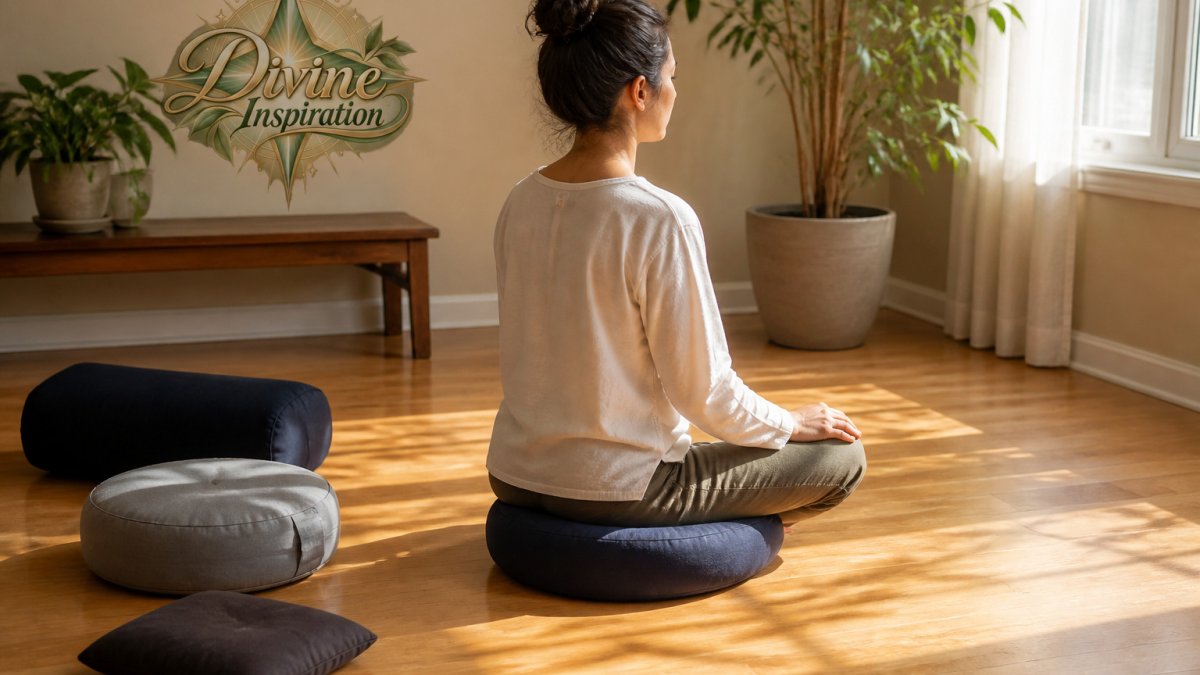
Other types serve different needs. You can browse the wider meditation range to compare these alternatives side by side. A meditation pillow is typically smaller and softer, useful for brief sits or travel. Crescent cushions curve around the body and suit people who want knee support. A meditation bench or stool lifts you off the floor completely, which can be the most practical option if sitting on the floor causes pain. Chairs work too, and we cover that below.
A common mistake is choosing the softest cushion available. Softness sinks under weight and reduces the lift your hips need. Firm support tends to serve a seated practice better than plush comfort.
Organic Buckwheat Meditation Cushion | Elevate Your Mindful Practice →
Meditation Cushion Filling: Buckwheat Hulls and Long-Term Care
Filling decides how a cushion feels on day one and how it performs a year later. The two common choices, buckwheat hulls and foam, behave very differently over time, and the difference is worth understanding before you buy.
Buckwheat Hulls: Adjustable and Long-Lasting
Buckwheat hulls are a traditional zafu filling. The product listing describes natural buckwheat hull filling that adapts to your shape and offers personalized firmness. That matters because your needs change, a cushion that felt right in month one may feel low in month twelve as the hulls settle.
Foam: Consistent but Less Tunable
Foam feels softer from the start and holds a consistent height, which some practitioners prefer. The trade-off is compression: foam loses loft over months of daily sitting and cannot be fine-tuned the way hulls can. A high-density foam holds up longer than a soft one, but once it compresses, replacement is usually the fix rather than adjustment.
Construction Details That Affect Lifespan
A removable, washable outer cover makes cleaning easier, since you can clean it without washing the filling.
Care, Cleaning and Storage
The outer cover of the Organic Buckwheat Meditation Cushion is removable and machine washable, so you can clean it without handling the filling.
The Organic Buckwheat Meditation Cushion from Divine Inspiration uses natural buckwheat hull filling and a soft, removable organic cotton cover that is machine washable. It is listed at $37.90.
The two common fillings behave differently over time, so here is how they compare.
| Filling | Key trait | Note |
|---|---|---|
| Buckwheat hulls | Adjustable firmness | Adapts to your shape over time |
| Foam | Consistent height | Loses loft and cannot be fine-tuned |
| Buckwheat hulls | Cleaning | Never machine wash or soak the filling |
| Organic Buckwheat Meditation Cushion | Price | $37.90 |
Posture, Stability and Pairing Your Cushion With a Mat
Good posture starts at the base. Sit toward the front third of the cushion so your hips tilt slightly forward. Let your knees fall toward the floor, and keep your spine long without forcing it upright. Stability comes from three points of contact, usually your two sitting bones and your knees. If you wobble, shift your weight until you find a balanced triangle.
A cushion on a bare floor can slide, especially on smooth wood. Pairing it with a mat solves that. A zabuton or a non-slip yoga mat keeps the cushion in place and adds padding for the ankles and knees. An eco-friendly cork yoga mat is one option for this base.
Test your setup for a full session. If the cushion shifts, adjust the mat before blaming the cushion.
Meditation Cushion Alternatives for Chairs and Stools
Floor sitting is not the only way to meditate, and many people do better without it. If your knees, hips, or back make cross-legged sitting difficult, a chair or stool can be a sound choice. Sit upright with both feet flat on the floor, your spine away from the backrest, and your hands resting easily in your lap.
A meditation stool or a firm, slightly tilted seat can keep the pelvis forward without the floor. For a deeper look at non-cushion options, see our guide to meditation tools for beginners. A small cushion placed on a chair seat can also add comfort. The principle is the same as with a zafu: keep your hips a little higher than your knees, and keep your spine stacked.
Booking Your First Cushion: Choosing From the Divine Inspiration Collection
When you are ready to choose, start with your body. Decide on height, firmness, and whether you need floor support or a seat that lifts you off the ground. Then decide how much you want to tune the filling over time. Buckwheat hulls suit people who want adjustability. Foam suits people who want a consistent feel.
The Divine Inspiration collection is built around meditation tools that help you carry a daily practice into your home. Our Premium Buckwheat Meditation Cushion is one option for home practitioners, and you can review its details and purchase it directly. We want your cushion to become a reminder of the sacred presence already within you, one practice at a time.

Frequently Asked Questions
What is the best meditation cushion for home practice?
The best cushion depends on your body and sitting style rather than one universal model. A round zafu raised several inches suits cross-legged sitting. Divine Inspiration's Organic Buckwheat Meditation Cushion, priced at $37.90, uses natural buckwheat hull filling. Start by testing the height that keeps your hips above your knees, then choose the filling and cover that suit your daily routine.
Do you need a cushion to meditate?
No, you do not strictly need a cushion, but many people find that one makes seated meditation more comfortable and sustainable. Raising the hips slightly above the knees tilts the pelvis forward and helps the spine stay upright without strain. If sitting on the floor causes knee or back discomfort, a cushion or a chair can support your posture. The goal is a stable position you can hold for your chosen session length.
What filling is best for a meditation cushion?
Buckwheat hulls are the most common filling for meditation cushions because they conform to the body and hold their shape well. The Organic Buckwheat Meditation Cushion at Divine Inspiration uses natural buckwheat hull filling with a removable, machine-washable organic cotton cover.
How do you clean and care for a meditation cushion?
The outer cover is removable and machine washable. The buckwheat hull filling should be kept dry and aired out periodically, since moisture can cause odor.

0 comments