

Last Updated: November 2, 2026
Quick Summary
To cleanse a room of negative energy, first clean it physically: clear clutter, dust top to bottom, wash textiles, and open two windows for cross-ventilation for at least 20 minutes. Then choose a method that fits your home, such as incense, sound, salt bowls, or breathwork, and walk the room clockwise while speaking a short intention.
- Clean and air the room physically before doing any spiritual cleanse.
- Open two windows for cross-ventilation for at least 20 minutes before starting.
- Room-by-room prep takes about 20 to 40 minutes per room.
- If you have 15 minutes, clear the floor, open two windows, and wipe surfaces.
- Skip all smoke methods if anyone in the home has asthma or smoke sensitivity.
Table of Contents
- What Negative or Stagnant Energy Means in a Room
- How to Prepare a Room Before You Cleanse It
- What to Say While Cleansing Your House
- How to Cleanse a Room Without Sage
- Salt Cleanse for a Home: Bowls, Corners, and Saltwater
- Sound Cleansing for a Room: Bells, Bowls, and Breath
- Fire Safety, Smoke Sensitivity, and Pet Precautions
- How to Tell Whether the Cleanse Helped
- Frequently Asked Questions
What Negative or Stagnant Energy Means in a Room
Negative energy in a room is the heavy, stuck feeling people notice when a space no longer feels restful.
That distinction matters. A room cleanse can combine two jobs: a spiritual practice of intention, and a practical reset of the physical space.
Here is what people usually mean when they say a room feels heavy:
- Stagnant energy: air that hasn't moved, corners that never get touched, rooms kept shut
- Emotional residue: a space tied to an argument, a loss, or a hard season
- Clutter pressure: visible mess that keeps the mind scanning
You do not need to believe in anything specific to notice the difference after a cleanse. You need to change the room and mark the change.
How to Prepare a Room Before You Cleanse It
Preparation is the step that decides whether a cleanse lasts. Clean the room physically before you cleanse it spiritually, because smoke and salt over a dusty floor do nothing.
Start with the boring work. It takes an afternoon and it changes the result more than any ritual object.
- Clear trash, dishes, and laundry out first
- Strip and wash bedding, throws, and cushion covers
- Dust from the top down: shelves, fan blades, picture frames, baseboards
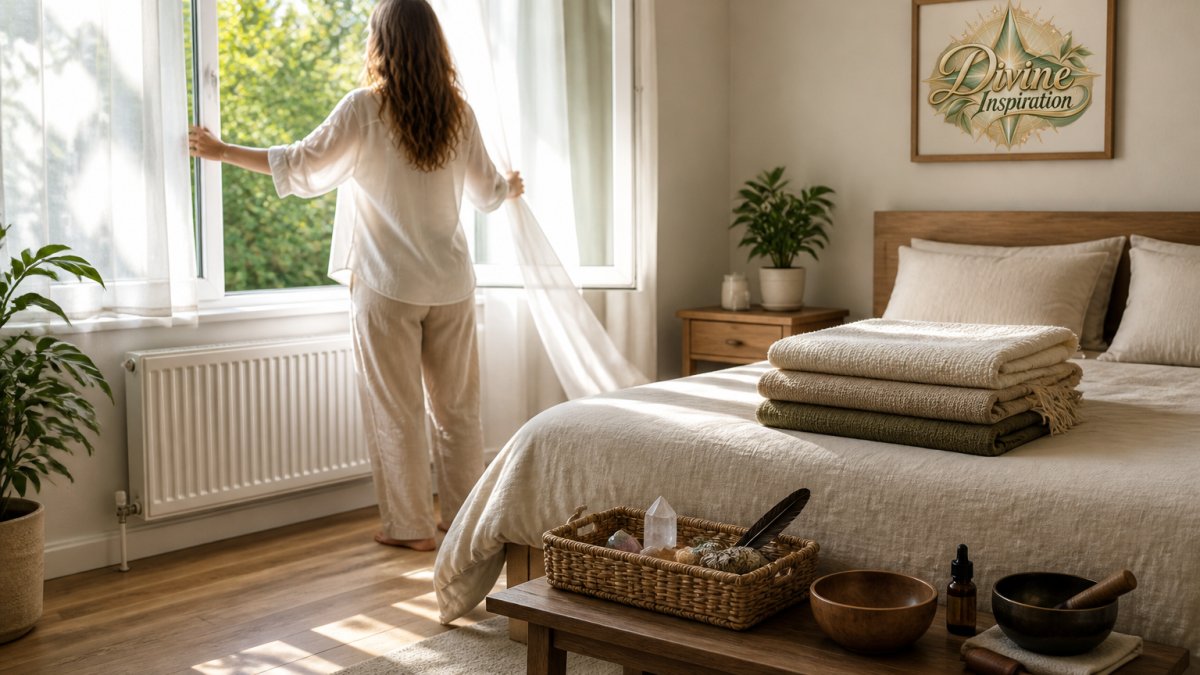
Open Windows, Declutter, and Clean First
Open the windows before anything else. Airflow is the single cheapest way to shift a stale room, and it costs nothing.
A common mistake is cleansing a closed room and sealing the smell in.
Decluttering deserves its own pass. Anything broken, unused, or tied to a hard memory can leave. Empty surfaces read as calm. Full surfaces read as unfinished work.
A Room-by-Room Prep Protocol
Use this sequence for each room you plan to cleanse. It takes about 20 to 40 minutes per room and gives you a repeatable order so nothing gets skipped.
- Clear the floor and surfaces. Remove trash, dishes, laundry, and anything that does not belong in the room. Put items in their actual home, not in a pile by the door.
- Strip and wash textiles. Bedding, throws, cushion covers, and curtains hold dust and smell. Wash what fits in the machine; air the rest outside if you can.
- Dust top to bottom. Start at the ceiling fan, light fixtures, and top shelves, then work down to baseboards. Dust falls, so top-down saves you a second pass.
- Vacuum or sweep, including edges. Get under the bed, behind the door, and into corners. Empty the vacuum canister or bin afterward.
- Wipe hard surfaces. Use a simple all-purpose cleaner on nightstands, door handles, window sills, and light switches. Dry anything metal so it does not spot.
- Reset the light. Open curtains, clean lampshades, and replace any dead bulb. A room with one working lamp reads as dim and unfinished.
- Air it out. Open two windows for cross-ventilation for at least 20 minutes. If the room has only one window, use a fan to push air toward it.
- Do a final walk-through. Stand at the door and look at the room as if you were a guest. Anything that still reads as clutter gets one more pass.
What to Skip If You Are Short on Time
If you have 15 minutes instead of an afternoon, do these three things in order: clear the floor, open two windows, and wipe the main surfaces. Skip the deep dusting and textile washing for another day. The cleanse will still land better than it would in a closed, cluttered room.
What to Say While Cleansing Your House
There is no required script. Speak plainly, out loud, in your own words, and mean what you say.
Many people find a short spoken intention is enough. Keep it to one or two sentences you would actually say.
Try one of these:
- "This room is clear. Only peace stays here."
- "I release what does not belong. I welcome rest and calm."
- "Whatever was heavy here is finished. This space is light."
Walk the room as you speak. Start at the door, move clockwise, and finish where you began.
Watch out: don't recite words you don't believe.
How to Cleanse a Room Without Sage
You can cleanse a room without sage using incense, candles, sound, salt, water, crystals, or breathwork. Sage is one option among many, and it is not the right one for every home.
Smoke sensitivity, pets, kids, and rental smoke detectors can all make sage a poor fit for some spaces. There is also a cultural conversation worth respecting: smudging with white sage is a practice with specific Indigenous roots, and some people prefer to leave it to those traditions rather than treat it as a generic room freshener.
Pick a Method by Your Situation, Not by Trend
Most guides hand you a list and leave you to sort it out. Start from your constraints instead. Find your situation in the left column and use the method that fits.
Transform Your Space with Egyptian Goddess Incense Sticks | Warm Musk & Floral →
| Your situation | Best first method | Why it fits | Skip or modify |
|---|---|---|---|
| Rental with sensitive smoke detectors | Sound, breathwork, or a saltwater wipe | No smoke, no flame, nothing to set off an alarm | Skip incense and candles near detectors |
| Small pets, birds, or a child in the home | Sound, breathwork, or salt bowls placed out of reach | No airborne smoke or open flame | Keep salt away from pets; no unattended flames |
| Asthma or smoke sensitivity in the household | Breathwork, sound, or a damp wipe-down | Nothing enters the airway | Skip all smoke, including incense |
| Apartment with thin walls or sleeping neighbors | Salt bowls, crystals, or a silent intention walk | Quiet and contained | Keep bells and bowls soft or skip them |
| Low budget, nothing to buy | Breathwork, clapping, opening windows | Costs nothing and needs no objects | None |
| Whole-home pass in one session | Sound (bell or singing bowl) plus open windows | Carries through doorways and shared spaces | Move pets to another room first |
| Evening wind-down, atmosphere matters | A candle on a heat-safe tray | Marks the change and slows you down | Never leave it unattended |
A simple rule: if anyone in the home has lungs that react to smoke, choose a no-smoke method. If the room has a smoke detector you cannot easily silence, choose a no-flame method.
Incense, Candles, and Breathwork Alternatives
Incense is the easiest swap for sage. The Egyptian Goddess Incense Sticks carry a warm musk and floral aroma that suits meditation and prayer. Pair them with a traditional wood incense holder so ash lands somewhere safe. For a candle option, the We Are One Alter Candle is a soy candle with a cotton wick.


Breathwork needs nothing at all. Stand in the center of the room, breathe in for four counts, hold for four, out for six. Repeat ten times. It sounds small. It works because it slows you down enough to actually notice the room.
A Note on Cultural Respect
Smudging with white sage is tied to specific Indigenous traditions, and some practitioners consider it closed to outsiders. If you want to honor that, choose incense, sound, or salt instead, or seek out a teacher from the tradition rather than buying a bundle online. None of the alternatives above require you to borrow from a culture that is not yours.
Salt Cleanse for a Home: Bowls, Corners, and Saltwater
A salt cleanse for a home uses salt to absorb and mark heaviness, usually left in place for a day or more. Sea salt or plain table salt both work.
Three ways to do it:
- Corner bowls. Place a small bowl of salt in each corner of the room. Leave it 24 hours, then discard the salt outside.
- Entryway dish. A shallow dish of salt near the front door catches what comes in.
- Saltwater wipe. Mix a spoonful of salt into a bowl of water and wipe door frames and windowsills. Dry afterward so nothing corrodes.
Watch out: keep salt bowls away from pets and children, and off metal surfaces that can pit. Baking soda works the same way if you have no salt on hand.
Sound Cleansing for a Room: Bells, Bowls, and Breath
Sound cleansing uses bells, bowls, or clapping to break up a room's stillness. The idea is simple: sound moves through space in a way sight does not, and it forces you to listen.
Walk the perimeter and ring a bell in each corner. Let the last ring fade fully before you move. Clapping works if you have nothing else, and it is oddly effective at making a room feel occupied again.
For a deeper session, a singing bowl set gives you a sustained tone to sit with. The CVNC Crystal Singing Bowls Set includes seven crystal bowls from 6 to 12 inches, two carry cases, and two suede mallets and two rubber mallets.

Fire Safety, Smoke Sensitivity, and Pet Precautions
Fire and smoke safety is the part most spiritual guides skip entirely. Skip it and you can turn a calm evening into an emergency room visit.
Follow these before you light anything:
- Set incense in a holder on a heat-safe surface, never on fabric or paper
- Keep candles and incense at least a foot from curtains, bedding, and shelves
- Never leave a flame unattended, even for a minute
Birds and small pets are especially sensitive to smoke, so use breathwork or sound instead if you share a home with them. If anyone in the house has asthma or smoke sensitivity, skip smoke entirely.
How to Tell Whether the Cleanse Helped
You will know a cleanse helped if the room feels easier to enter and easier to sit in. That is the honest test, and it is subjective by design.
Look for small signals:
- You linger in the room instead of passing through
- The air smells clean rather than covered up
- You sleep better in that room for a few nights
Some people like to mark the change with something they wear or keep close. A spiritual protection bracelet is one way to carry that intention past the cleanse itself.
If a room still feels wrong after a full physical reset and a cleanse, look at the practical causes first: noise, light, a bad mattress, a door that doesn't close.
Frequently Asked Questions
How do you cleanse a room of negative energy without smoke?
Skip smoke entirely and work with airflow, sound, and salt. Open every window for 15 to 20 minutes, then clap or ring a bell in each corner to break up stagnant energy. Place a small bowl of sea salt in the room for a day, and finish with a few slow breaths at the doorway while setting a clear intention.
What should I say while cleansing my house?
Keep it simple and in your own words. Many people say something like, "I release what no longer serves this space, and I welcome peace, clarity, and love." Repeat it once in each room or at each corner. If prayer is part of your practice, speak that instead. The wording matters less than the intention behind it, so choose a phrase you can say sincerely and without stumbling.
How do you use salt to cleanse a room?
Place a small bowl of sea salt or a mix of salt and baking soda in the corners of the room or on a central surface. Leave it for 24 hours, then discard it outside or down the drain rather than keeping it in the house. You can also wipe surfaces with a mild saltwater solution, but test a hidden spot first on wood or metal so you do not leave marks or residue.
How long does it take to cleanse a room?
A single room takes about 20 to 30 minutes if you include opening windows, a quick declutter, and a pass with sound or incense. Salt bowls work on a longer timeline, usually 24 hours before you remove them. Whole-home cleanses take an afternoon. Repeat the practice seasonally or after major life events rather than daily, since constant cleansing tends to dilute the intention behind it.
Rooms hold what we bring into them, and clearing one is a small act of care you can repeat any time the weight returns. At Divine Inspiration, we build objects meant to support that practice: incense for a slow walk through a room, a candle for the quiet hour after, and a bowl set for when the whole house needs it. Explore the collection and give your space something to hold onto.

0 comments